A dependable supplier of premium basmati rice provides a consistent quality grain, undergoes stringent quality check processes, and provides a broad variety of grain offerings. Such a supplier is reliable, efficient, and transparent in its business practices. A supplier with several years of experience in milling and processing grains is better positioned to assess the quality of grain and source the grain better compared to a supplier with less experience. This is something worth considering when making a purchase to prevent disappointing your clientele with sub-standard and inconsistent grain supply.
For a business, whether it be a retail establishment or a restaurant, which is involved in the commercial and/or bulk transportation and export of grain, the most critical and pivotal decision which determines the ultimate success or failure of the business is the choice of supplier. The long-term viability of your business hinges upon the choice of supplier.
When the grain market is saturated with countless suppliers of “best basmati rice brand” and “long grain basmati rice”, it is imperative that a potential buyer identifies and analyzes the true worth and quality of each supplier. This information will assist the consumer of grain in identifying the true worth of each supplier.
What Does It Mean to Be a Reliable Basmati Rice Supplier?
This business requires a special kind of reliability. Rice, for example, can be delivered on time, but if the shipment contains poor quality rice, the delivery is for naught. A reliable supplier can be identified by the consistent quality of the grain. This includes the grain’s aroma and its length as well as how the grain behaves during the cooking process.
An additional form of reliability is how a supplier addresses the client’s concerns and maintains clear lines of communication. Reliability is demonstrated by a supplier that lets the client know in advance of any potential changes to the shipment. This can include the shipment route or the method of rice processing, for example.
In the case of a supplier of rice for sale or use in a restaurant, a reliable supplier is able to maintain a client’s confidence and trust, as well as gain new clients. This is often not the case for an unreliable supplier.
Key Qualities to Look for in a Premium Basmati Rice Supplier
Plenty of suppliers think “premium” is synonymous with their name. Here are the factors that actually distinguish premium suppliers.
Even Grain Length
Grain length, or the uniformity of individual grains of rice, is equally important. Long grain white basmati rice is supposed to be long throughout. Grains of rice should also maintain a uniform color and texture. Inconsistencies indicate a supplier’s inability to source quality rice, process and age the rice properly.
Multi-level Quality Control
In order to ensure the rice is processed and packaged according to quality standards, several quality checks should be conducted throughout the process. The supplier should be able to communicate these processes. Also, the supplier should ensure that the paddy is of good quality prior to milling. Rice should be checked for broken grains and other impurities.
Range of Products
Different types of basmati rice are needed for different customers and orders. If a supplier can provide steam processed rice, golden sella rice, and other aromatic options, then it gives you the ability to not restrict yourself to just one type of rice.
Timely Delivery
There are many suppliers of basmati rice. The most valuable basmati rice is of no use if the supplier fails to meet the delivery commitment. Reliability and commitment to your business by a supplier is best reflected in the timely delivery of goods.
Business Transparency
Clear pricing, honest communication about sourcing, and straightforward answers to questions are signs of a supplier that has nothing to hide. Vague responses about where rice is sourced or how it’s processed should raise concerns.
Why the Supplier’s Background Matters
Examine a supplier’s history and you will have a better story than any salesperson can spin. Survival for four decades or longer in a business means a company has worked through many business cycles and has perfected relationships with raw material suppliers. This experience can’t be faked or bought.
Like all relationships, experience can lead to deep understandings of various factors that contribute to the final quality of the raw material. Understandings like these can be passed on to a supplier who, in turn, can provide them to a buyer.
An extensive background doesn’t necessarily signify high quality, but it is a factor and should be considered when looking at alternatives.
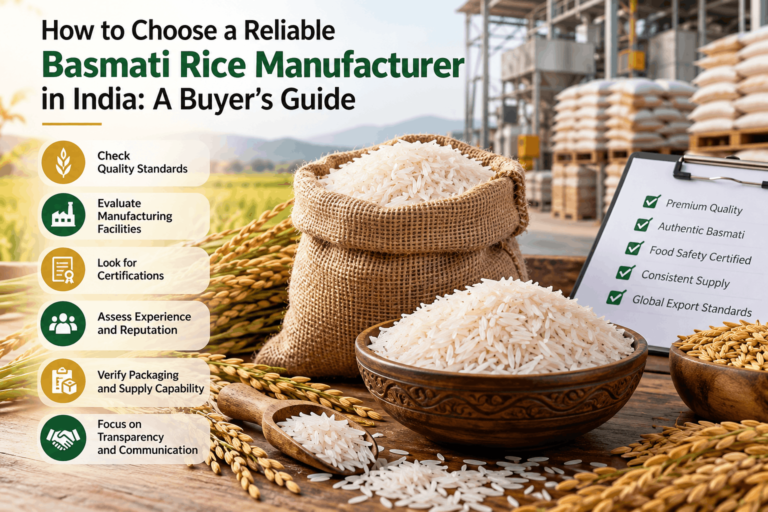
How to Evaluate a Basmati Rice Manufacturer Before You Buy
Before committing to a supplier, a few practical steps can save you from costly mistakes:
- Ask for samples. Cooking a small batch tells you more than any product description. Check for grain elongation, aroma, and texture after cooking.
- Inquire about processing methods. Whether it’s steaming, parboiling, or aging, understanding the process helps you judge whether the supplier’s claims match their actual operations.
- Check product variety. A manufacturer offering multiple basmati varieties, from everyday rice to premium aromatic grades, suggests broader expertise and infrastructure.
- Review delivery track record. Ask other buyers or check references about whether shipments consistently arrive on schedule.
- Assess transparency. Suppliers willing to answer detailed questions about sourcing, quality control, and business practices are typically more trustworthy than those who deflect.
Choose a supplier that scores well across most of these criteria, particularly if consistency and long-term partnership matter more to your business than the lowest possible price.
Where Waada Fits In
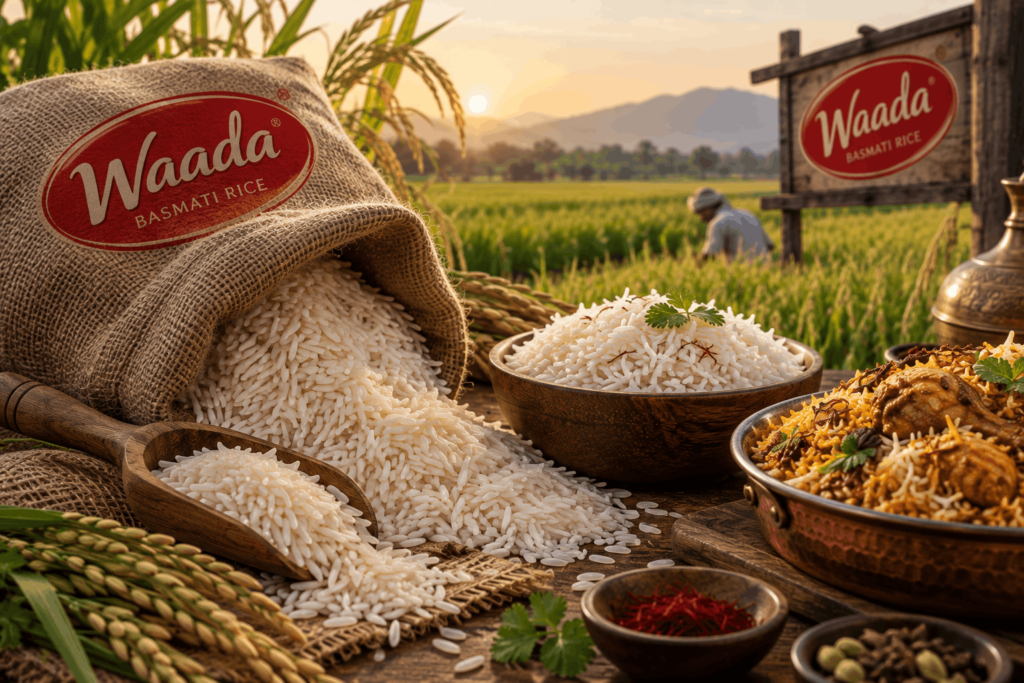
Waada Basmati Rice is a subsidiary of Gian Chand Dina Nath, which has been in operation since 1952. A prolonged period in the industry has enabled the development of supply chain and processing skills. This experience is valuable in the basmati rice business.
Waada manufactures various types of Basmati Rice. Steam Basmati Rice expands and does not stick together after cooking. Golden Sella Basmati Rice is Basmati’s parboiled variety. Zafrani Basmati Rice is a fragrant Basmati variety. Each of these varieties have different end uses and attractiveness to customers.
If you wish to learn more about the company, you can see their timeline on the About Waada page, or you can submit your questions on the Contact Us page to inquire more about your product interests.
Choosing a Supplier That Fits Your Business
Choosing a supplier of premium basmati rice requires evaluating factors other than price. You should consider the quality of the grain, the supplier’s practices for quality control, the range of products the supplier offers, and the supplier’s reliability in providing the products and in business generally. A supplier’s experience may be relevant, but it should be considered with the other factors.
When starting a restaurant or other business that requires the purchase of basmati rice from a supplier, or when starting a business that would require the purchase of basmati rice from a supplier, the factors described above should be considered. Long-term experience in the business and a wide range of products offered by a supplier, like Waada, should also be considered when determining the best supplier with which to do business.