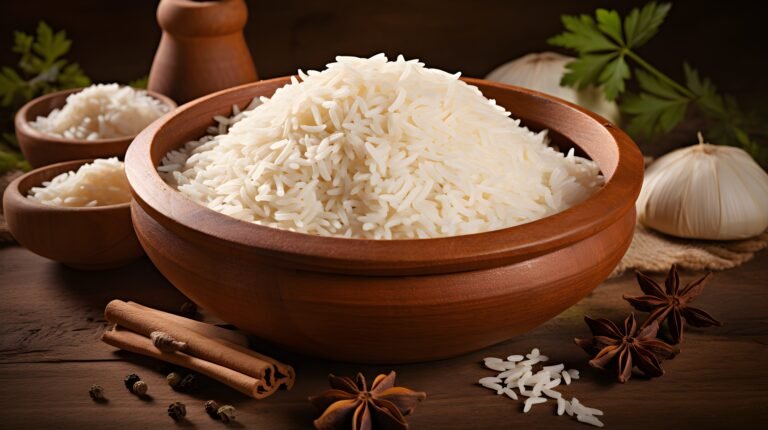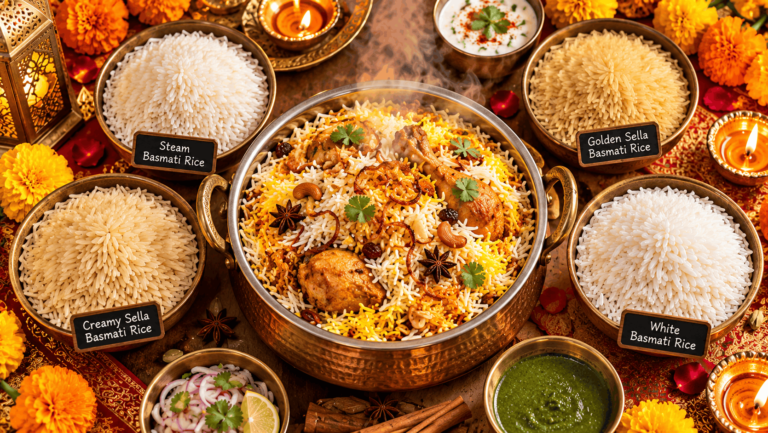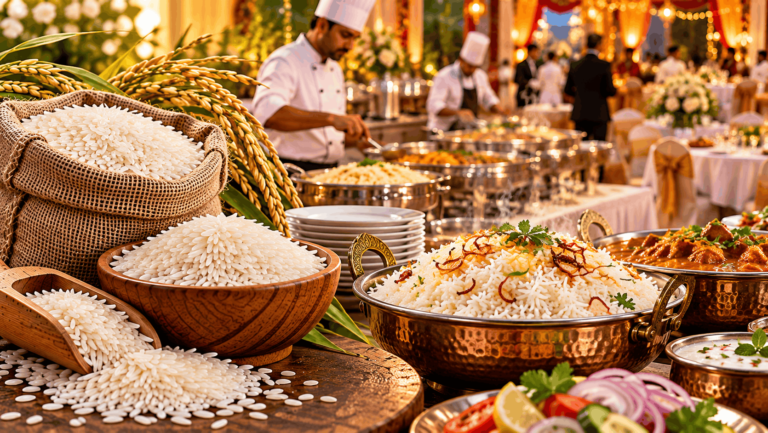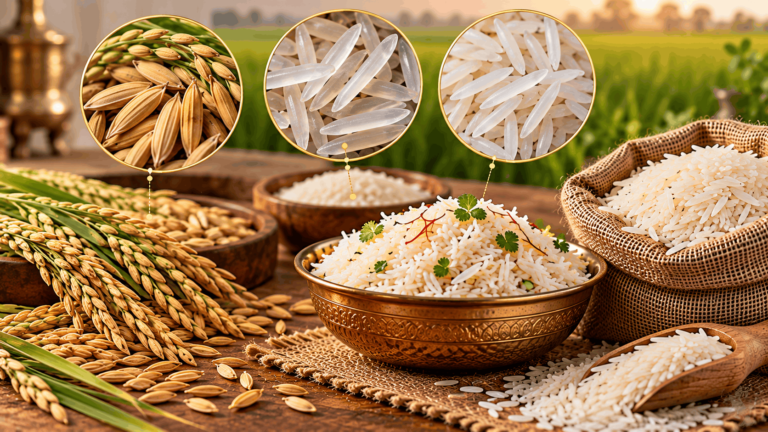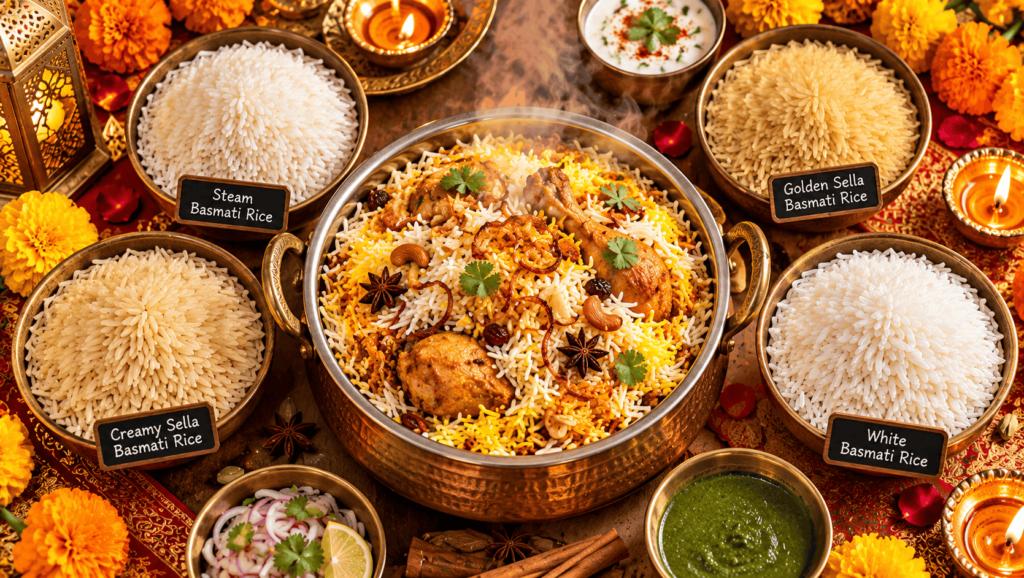
There are a few types of basmati rice to consider based on the dish you’re cooking, like Creamy Sella or 1121 for biryani, or Golden Sella for pulao. There are also considerations for how long the rice has aged, what type of processing it underwent, and the length of the grains. All of these things help determine how rice looks and tastes for your special meals.
Rice is always at the center of festive meals. Biryani and pulao are just a couple of dishes where getting the basmati rice right is just as important as getting the spice mixes and marinades right. Getting the rice wrong results in a pot of mush or broken grains, and no one wants to serve that to their guests.
This guide takes a look at what makes basmati rice “premium”, the differences between 1121 and traditional basmati, as well as which processing type is best suited for what festive dish. This will help you in your rice and rice supplier selection for family get-togethers and Diwali celebrations.
What Makes a Basmati Rice “Premium” for Festive Cooking?
There are three main factors that make basmati rice “premium”.
- Grain length. Longer grains extend further during cooking, giving dishes like biryani their signature look.
- Aroma. Basmati rice carries a natural fragrance that intensifies with proper aging and cooking.
- Aging. Rice aged for a year or more loses excess moisture, which helps grains stay separate and firm instead of clumping together.
Flavor is important in any dish, but during the festive season when family and friends gather, presentation is equally as important. The elements highlighted below are the decisive factors as to whether your rice dish is average or restaurant quality.
1121 Basmati vs. Traditional Basmati – Which Should You Choose For Festive Dishes?
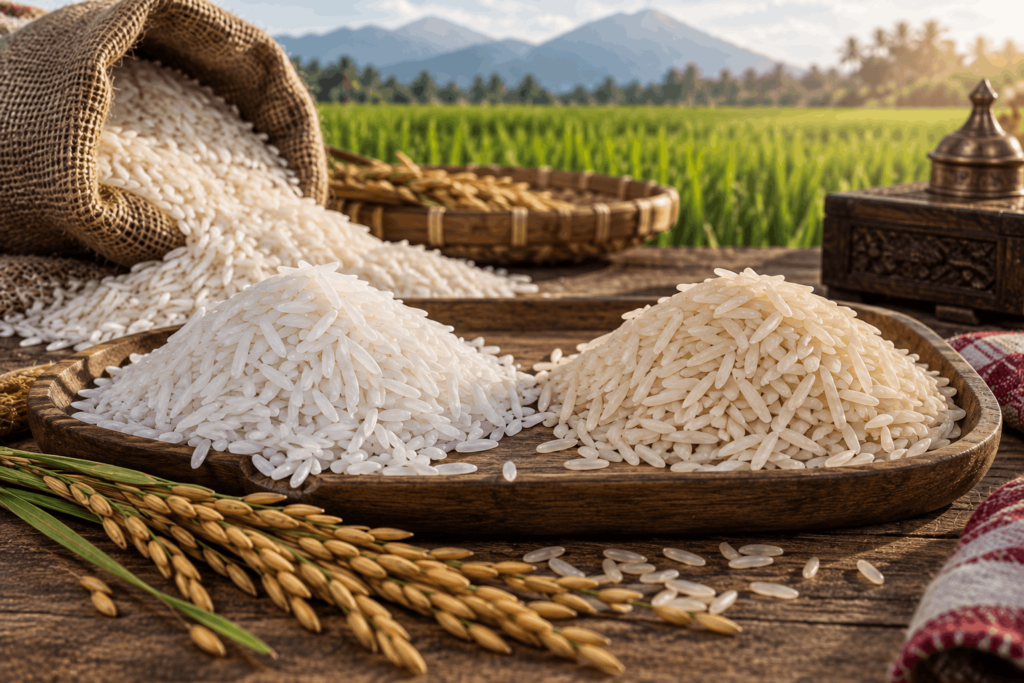
There is healthy debate among caterers and household cooks on the pros and cons of 1121 basmati and traditional basmati varieties. Traditionally, basmati varieties grown in India possess certain characteristics valued by home cooks for many years. While preferences for rice may vary, certain traditional attributes provide credence to the debate.
Length and Appearance
Traditionally, basmati grains have an elongated shape and texture, but may be shorter than the grains in 1121 basmati. For presentation, when the rice is cooked, 1121 basmati grains may extend even further, and some cooks prefer it for dishes where the grains extend out, like biryani.
Aroma
Traditional basmati has a stronger and more pungent aroma than 1121 basmati. Because of this, some home cooks prefer to use traditional basmati for dishes where aroma is the main feature, like a simple vegetable pulao.
Other Considerations
If the dishes you prepare regularly lend themselves to a firmer texture, like in biryani, then the longer grain of 1121 basmati would be a better choice. If your family prefers a softer texture, then traditional basmati is the better choice.
Which Rice Works Best for Each Dish?
Knowing the right kind of rice to use for each dish can elevate a meal from good to great.
Biryani
The grains of rice used to make Biryani should be long and separate in order to maintain their shape throughout the layering and steaming process. The long and firm grains of Creamy Sella and 1121 Basmati rice keep their shape throughout the steaming and slow cooking process and are, therefore, good options for making Biryani.
Pulao
Grains of rice for a good Pulao should not be too long, and fragrance and tenderness should be the major concerns for the dish. Good options for making Pulao include Traditional Basmati and Golden Sella Basmati rice.
Plain Steamed Rice
For plain steamed rice, which is typically served with dal and vegetable curries, Steam Basmati rice or White Basmati rice are the better options as they hold their shape well, remain separate, and are fluffy after cooking.
Types of Processing of Basmati Rice
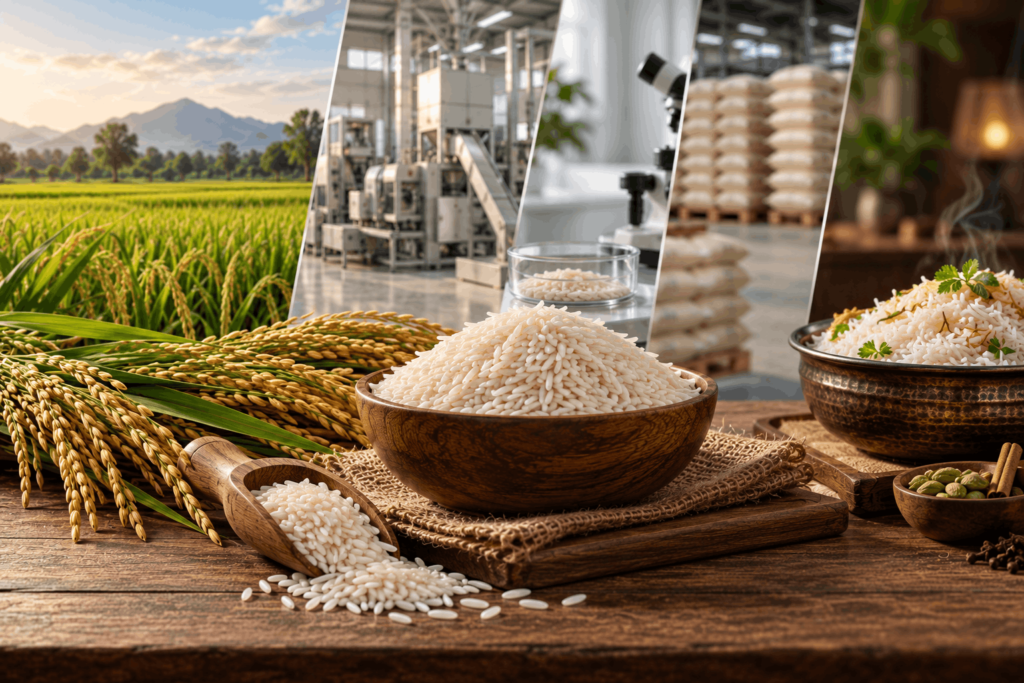
There are several ways in which Basmati rice can be processed, which ultimately determine how the rice looks and performs after cooking.
Steam Basmati Rice: This type of processing involves parboiling the rice and removing excess moisture. This makes the rice fluffy and separate after cooking.
Golden Sella Basmati Rice: This rice is parboiled and dried in a way that makes its grains turn a golden color. The processing increases the strength of the grains, which allows the rice to be used for longer cooking processes, like Pulao.
Creamy Sella Basmati Rice: Processed similar to Golden Sella, but with a lighter, creamier texture. Holds its shape very well during slow cooking, which is why it’s very common in biryanis.
White Basmati Rice: Also known as Seer Basmati, is milled without the parboiling step, which gives it a cleaner, whiter color, and a more delicate texture. The preferred choice for steamed rice.
With this baseline knowledge of rice processing, you can make the appropriate choice for your dish and avoid mishaps on the days the whole family’s looking into the pot.
What Should You Look for in a Basmati Rice Supplier?
There are a few things to keep in mind when assessing Basmati rice suppliers as well.
Uniformity of the grains: Look for a supplier where the batch grains are all the same length and color.
Aging of the Rice: Ask how long the rice was aged prior to being packaged and sold.
Sourcing Transparency: A good supplier should be able to explain the location and method of farming of the rice.
Reliability: For retail, wholesale, restaurant, and catering businesses, having a reliable supplier during peak seasons is very important.
Knowledge of the Area: Sometimes, a supplier that is based and operates within the same region as you has a better understanding of the needs of consumers in that area.
Keep these in mind when selecting a supplier, especially during peak seasons.
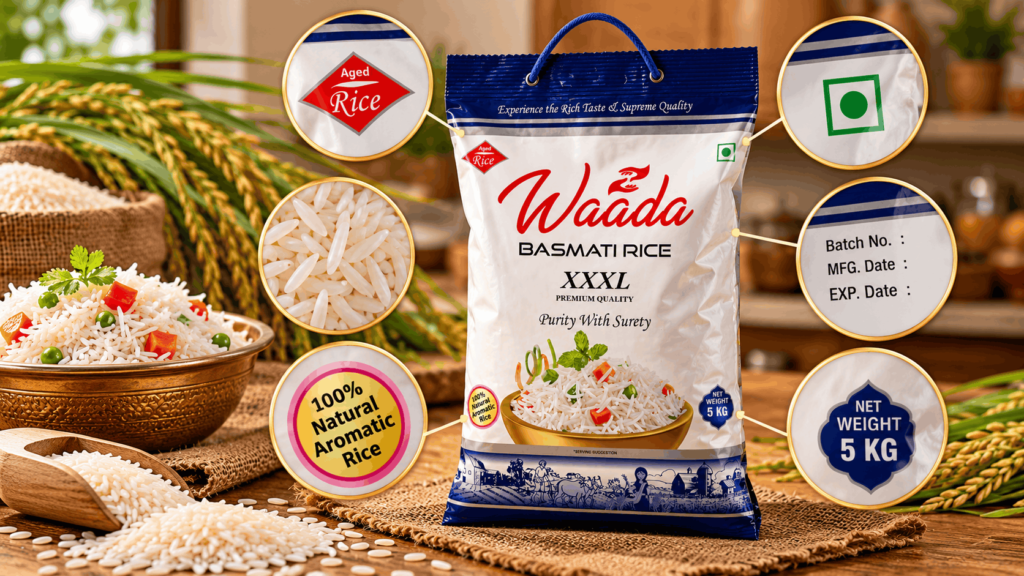
Waada Basmati Rice – A Regional Supplier Since 1952
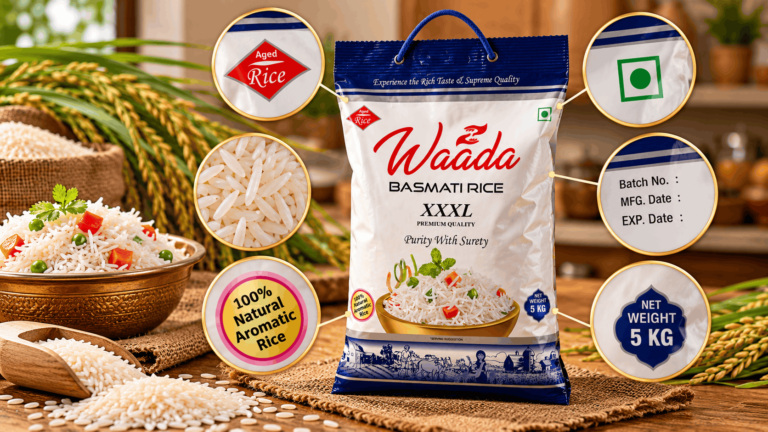
Wada Basmati Rice has been providing rice to households and businesses since 1952. As a regional supplier, Wada has been covering the markets of North India and focusing on the Delhi region. Closer attention has been paid to the varieties of steam basmati rice, golden sella basmati rice, and zafrani basmati rice to suit the requirements of businesses and local cooks.
When it comes to festive cooking, having the right ingredients is very important to prepare the right dishes to impress family and friends. Decades of rice business have given Waada, the expertise to understand the requirements of the festive cooking.
The Right Rice For a Memorable Festive Feast
Using the right basmati rice can turn your good festive dish into an outstanding one. Choose the right rice to complement your recipe and see the difference for yourself.
Learn more about Wada’s journey. If you have any questions about our range or for your festive cooking, contact us.