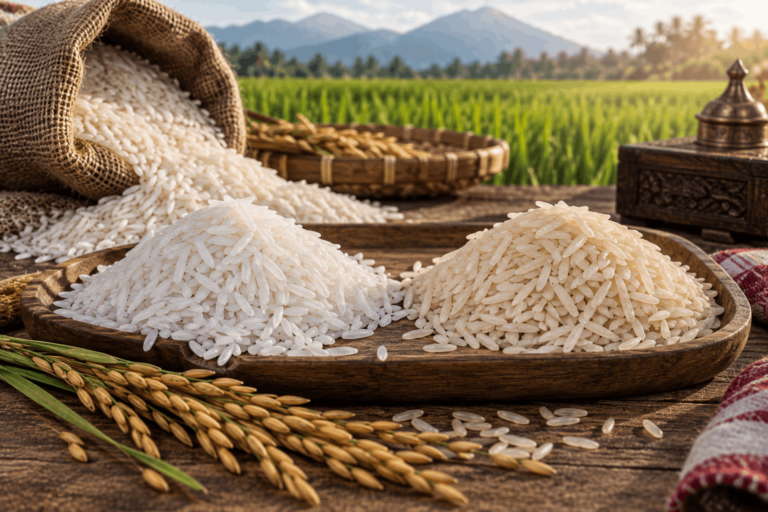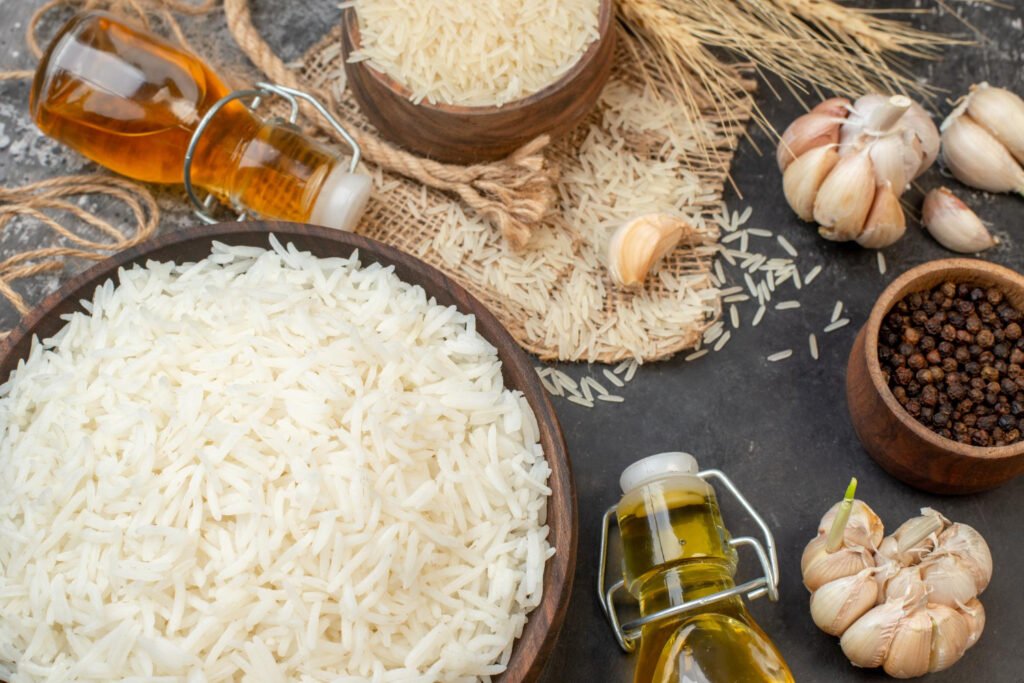
Across the global culinary landscape, few staple ingredients command the same level of prestige, reverence, and culinary demand as long grain white basmati rice. Often referred to as the “King of Rice” or “the grain of kings,” true Basmati is far more than a simple source of carbohydrates. It is an artisanal agricultural product, shaped by specific geographic conditions, centuries of traditional farming wisdom, and sophisticated post-harvest processing techniques.
For culinary professionals, high-volume food distributors, and discerning home cooks alike, this unique grain represents the gold standard of culinary performance. But what exactly transforms a simple crop into a global luxury commodity? To truly understand the value of premium long grain white basmati rice, we must look closely at its unique characteristics, its demanding cultivation process, its undeniable health advantages, and its unmatched versatility in professional kitchens.
1. The Power of Geography: The Terror of the Himalayas
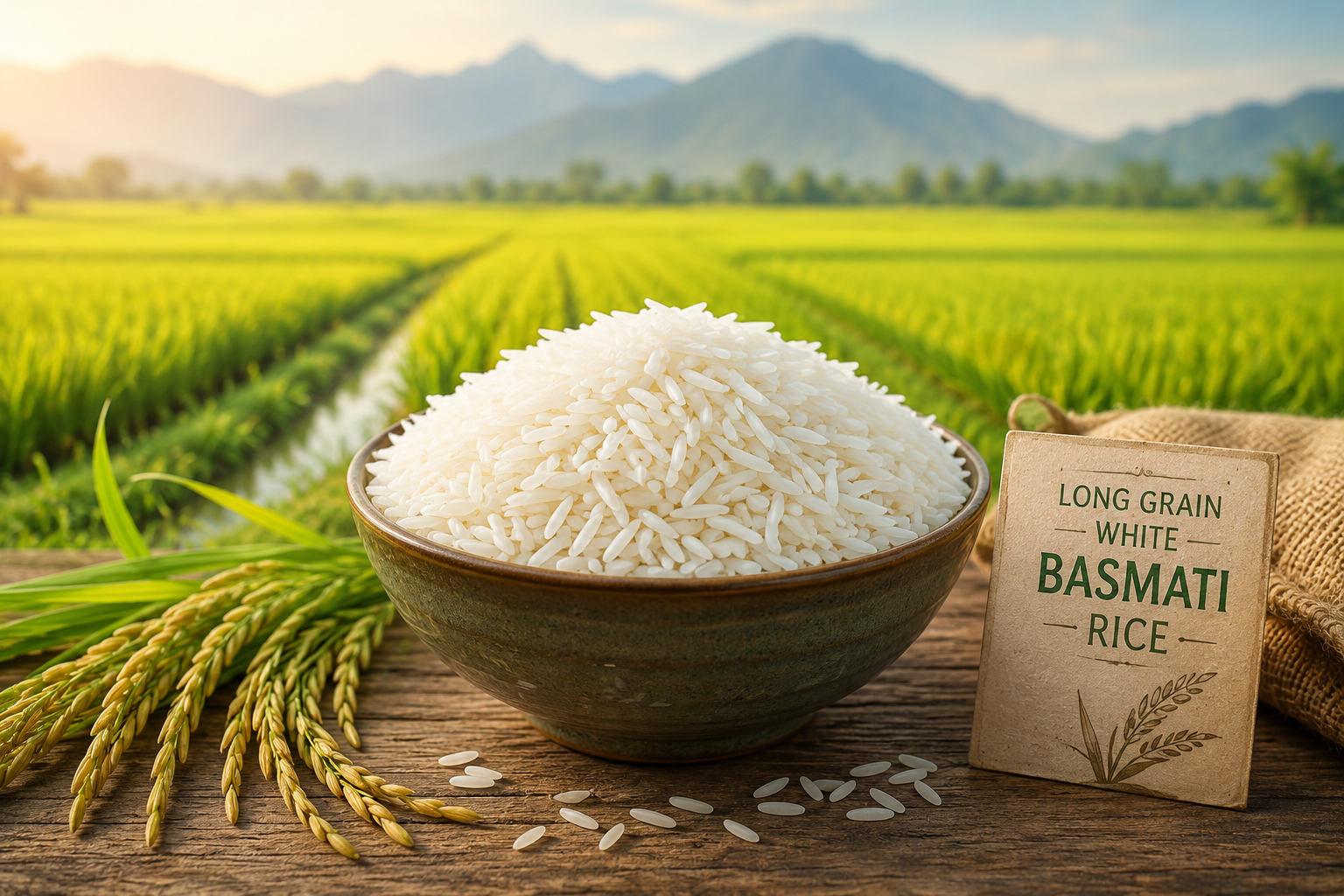
Just as authentic champagne can only come from the designated hillsides of France, true long grain white basmati rice possesses a strictly protected geographical indication (GI) status. Authentic Basmati rice can only be cultivated in the specific Indo-Gangetic plains situated at the pristine foothills of the Himalayan mountain range. This region spans parts of northern India and Pakistan.
The unique ecosystem of this specific geographic zone provides the perfect “terroir” for the crop:
-
- Glacier-Fed Rivers: The rice paddies are continuously nourished by mineral-rich, snow-melt waters flowing directly from Himalayan glaciers. These waters infuse the soil with unique micronutrients that cannot be replicated in other agricultural zones.
-
- Agro-Climatic Harmony: The grain requires a precise balance of heavy seasonal monsoon rains followed by sharp, cool, dry winter winds during the ripening phase. This climate stimulates the rice plant to produce high concentrations of specific natural chemical compounds, most notably 2-acetyl-1-pyrroline, which gives Basmati its world-famous aroma.
Any long-grain rice grown outside this specific geographic belt lacks these exact soil configurations and weather patterns, rendering it unable to match the true fragrance and texture profile of genuine Himalayan Basmati.
2. Anatomical Distinctions: Unmatched Grain Elongation
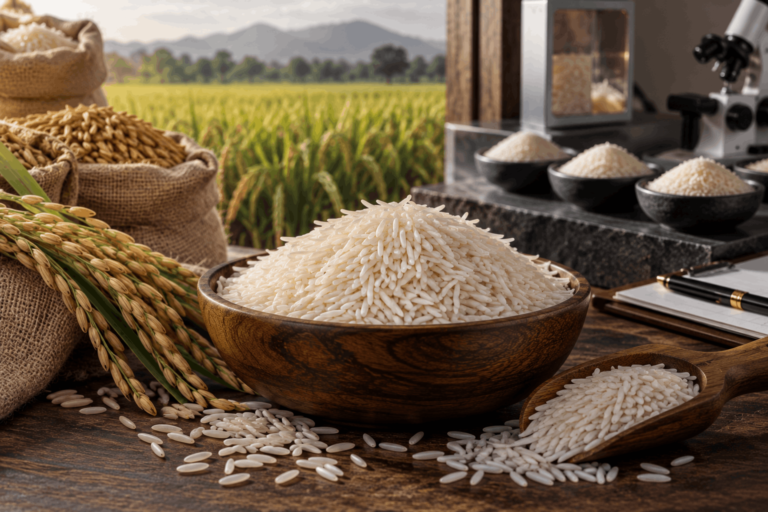
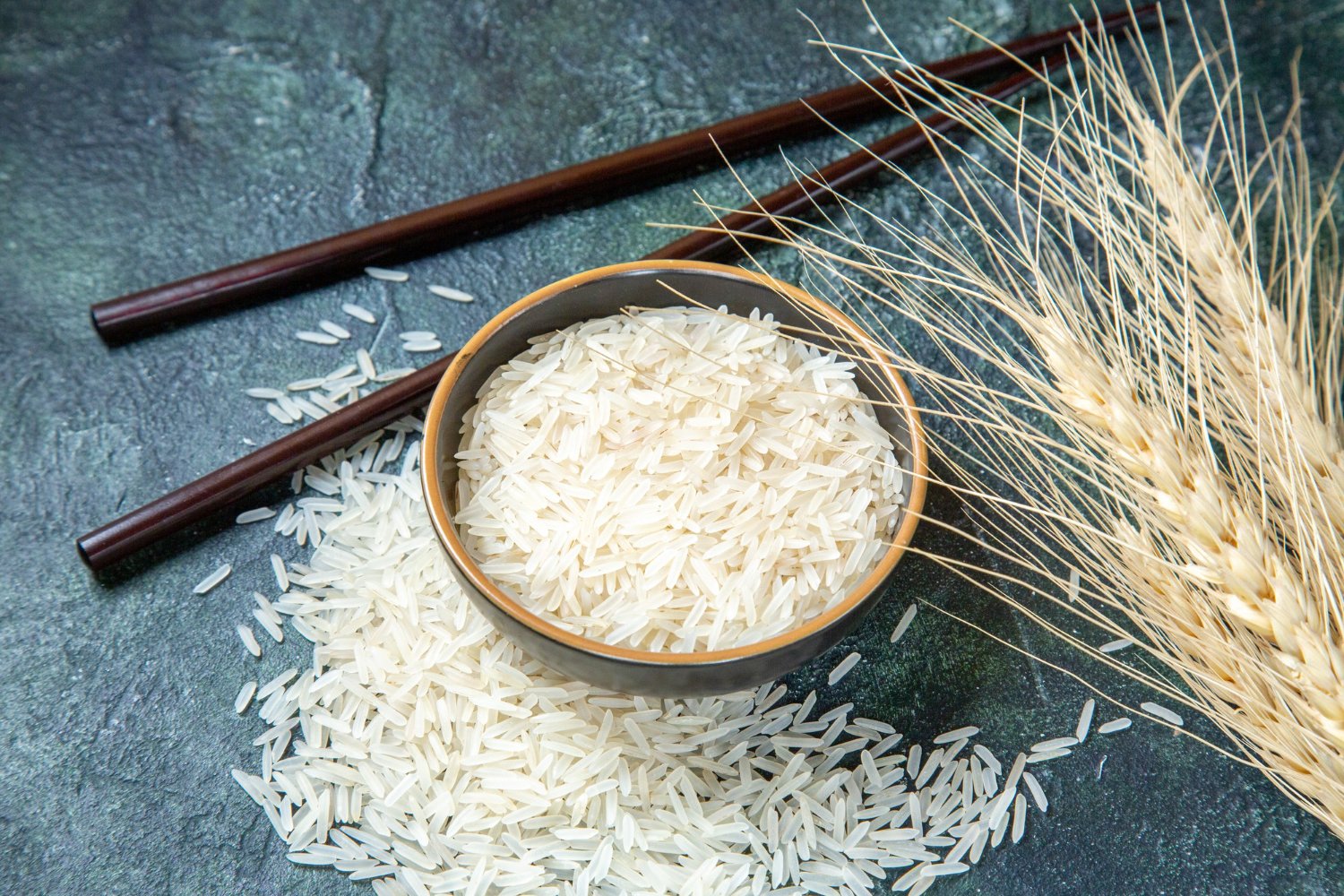
When viewing raw grains, high-quality long grain white basmati rice is immediately recognizable by its physical anatomy. The raw slender grains are exceptionally long, thin, and feature slightly tapered ends, resembling miniature swords rather than oval beads.
However, the real magic occurs during the cooking process:
The Elongation Factor
While standard long-grain rice varieties expand primarily in width when boiled, premium Basmati behaves entirely differently. It undergoes extreme longitudinal elongation, expanding to at least twice and frequently more than two and a half times its original raw length. At the same time, the grain remains incredibly slender, absorbing water along its length without swelling sideways or bursting its outer cell wall.
Why the Rice Stays Perfectly Fluffy and Separate
Inside every grain of rice, there are two types of starches: amylose (straight starch chains) and amylopectin (sticky, branched starch chains). Basmati rice is special because it has a very high amount of straight, non-sticky starch.
Think of it this way:
- Normal rice has a lot of sticky starch, which melts when heated and makes the grains glue together.
- Basmati rice has mostly straight starch, which does not melt or get sticky when boiled. Because of this, the grains don’t release slimy starch into the cooking water.
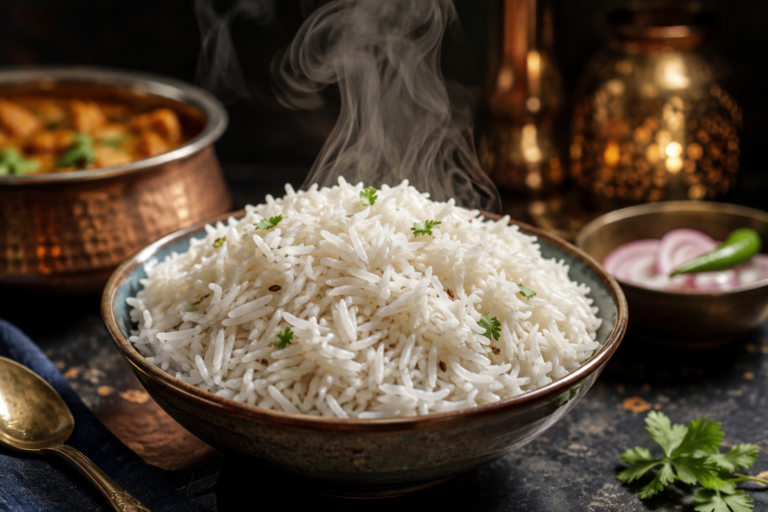
The final result is a plate of rice where every single grain stays completely separate, light, and dry. It completely stops the rice from clumping together or turning into a mushy paste. This perfect separation is exactly why professional chefs and caterers love using Basmati for big events—it looks beautiful and never gets sticky.
3. The Art of Aging: Enhancing Flavor and Structure
One of the most remarkable and counter-intuitive facts about premium long grain white basmati rice is that it is never consumed fresh from the harvest. Newly harvested paddy contains a high level of moisture and volatile moisture bonds that make the rice fragile and prone to breaking down during the milling process.
To resolve this, premium producers subject the grain to a meticulous aging process, typically lasting anywhere from 12 to 24 months in temperature-controlled, well-ventilated silos. This aging process acts as a transformative refinement period:
-
- Starch Stabilization: Over months of storage, the moisture content naturally drops and stabilizes to a perfect 11% to 12%. The internal starch matrices harden, increasing the structural integrity of the grain so it can withstand aggressive industrial milling and high-heat commercial cooking without fracturing.
-
- Aroma Concentration: Much like an exceptional vintage wine, aging allows the volatile aromatic oils inside the grain to mature and concentrate, intensifying the signature nutty flavor profile.
-
- Cooking Enhancement: Aged Basmati yields a much higher volume expansion upon cooking compared to fresh crop, requiring less oil and yielding a significantly lighter, fluffier texture on the plate.
4. The Science Behind the Aroma
The name “Basmati” translates literally from Sanskrit as “the fragrant one.” Anyone who has ever prepared a pot of authentic long grain white basmati rice knows that its fragrance fills an entire room long before the cooking cycle is even complete.
Scientists have isolated the primary organic compound responsible for this unique sensory experience. While all rice varieties contain trace amounts of this compound, true Himalayan Basmati possesses it in concentrations up to twelve times higher than standard white rice.
This gives the grain its characteristic warm, nutty, and popcorn-like fragrance. When combined with traditional spices like saffron, cardamom, cumin, and cloves, this natural aroma acts as an exquisite flavor enhancer, lifting simple household dishes into memorable gourmet experiences.
5. Surprising Health and Metabolic Benefits
While white rice is often over-generalized as a simple fast-digesting carbohydrate, long grain white basmati rice breaks this stereotype entirely due to its distinct chemical composition.
| Health Metric | Standard White Rice | Premium White Basmati Rice |
| Glycemic Index (GI) | High (70 to 89) | Low to Moderate (50 to 58) |
| Digestive Speed | Rapid spike in blood glucose | Slow, sustained energy release |
| Grain Separation | Sticky/Clumped (High Amylopectin) | Distinct/Fluffy |
Because the straight-chain amylose starch molecules take longer for human digestive enzymes to break down, the glucose is released gradually into the bloodstream. This prevents the sharp insulin spikes and subsequent energy crashes typically associated with short-grain white rices. Consequently, small, balanced portions of premium Basmati can easily be integrated into health-conscious diets and blood-sugar management regimes.
Furthermore, authentic Basmati is entirely gluten-free, naturally low in fat, and free of cholesterol. It contains essential B-vitamins (such as thiamine and niacin) and vital minerals like iron and magnesium, making it an incredibly clean, easily digestible fuel source for the human body.

6. The Culinary Anchor of Global Cuisine
From an operational standpoint, the physical resilience and distinct separation of long grain white basmati rice make it the ultimate canvas for a vast array of global culinary traditions.
-
- The Ultimate Pilaf and Biryani Foundation: In Persian, Indian, and Middle Eastern cuisines, dishes like Biryani, Pulao, and Kabsa require layered cooking with heavy meats, oils, and steam. Basmati grains act like rigid tubes, absorbing the rendered fats, rich broths, and aromatics directly into their core while maintaining their perfect individual shapes.
-
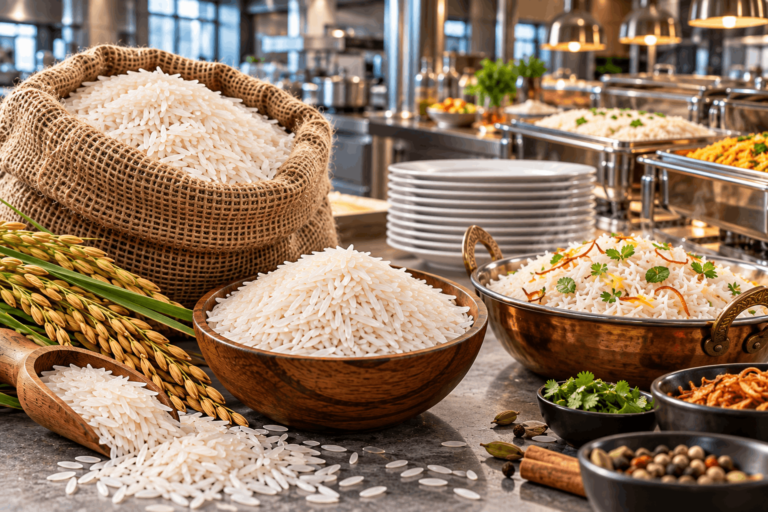
- The HORECA Standard: For hotels, restaurants, and catering operations, food presentation is everything. Basmati can sit in commercial warming trays or buffet chafing dishes for extended hours without sweating, weeping moisture, or collapsing into a sticky mass, ensuring every guest receives a pristine dining experience.
Conclusion: An Investment in Culinary Luxury
Ultimately, what makes long grain white basmati rice truly special is its uncompromised combination of natural genetic superiority and rigorous human craftsmanship. From the melting glaciers of the Himalayas to the patient watchfulness of the aging silos, every step of its journey is designed to maximize aroma, length, and texture.
Whether you are an international food distributor establishing a premium private label, a chef engineering an unforgettable catering menu, or a home cook looking to elevate an everyday family meal, sourcing authentic Basmati is an investment in pure quality. It is a grain that transforms eating into dining, and simple sustenance into an extraordinary sensory celebration.