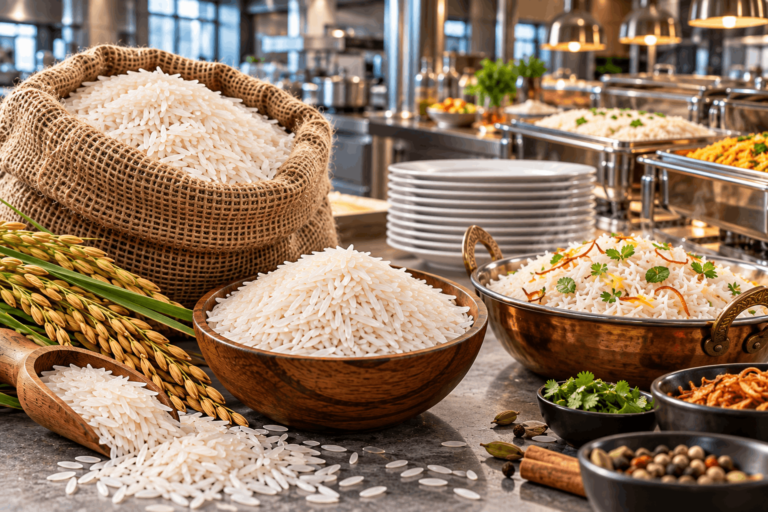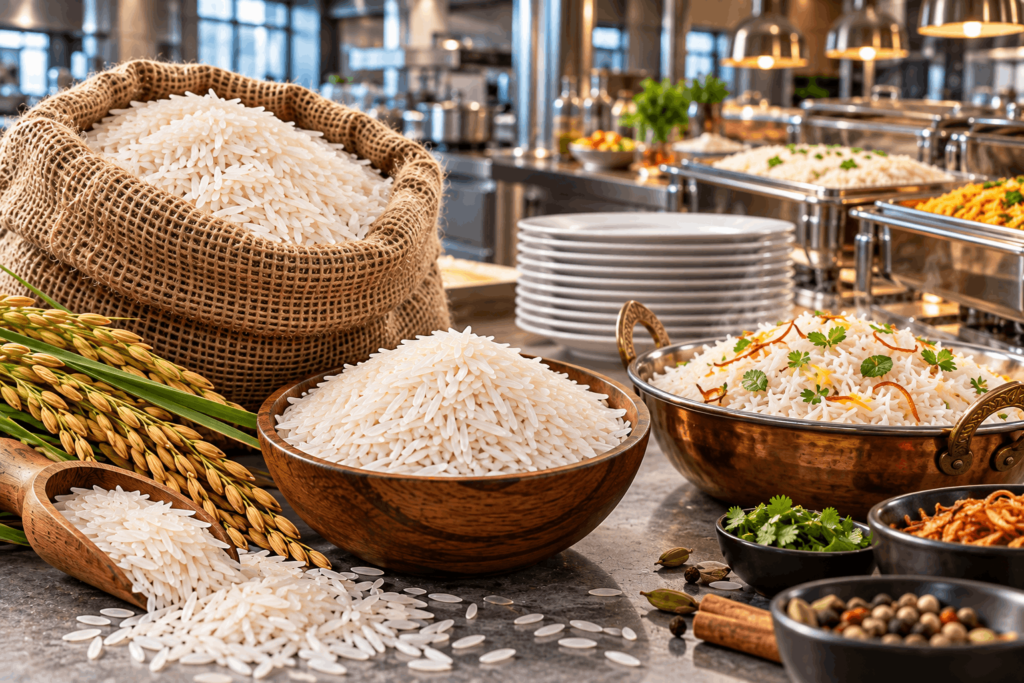
Rice plays an essential role in various food service industries. It is the base for dishes that boost profitability and large banquets. Different grains help food service professionals with multiple challenges related to efficiency and cost in the back of the house. Rice is versatile and has multiple functions. It can help culinary professionals with a range of issues from improving the visual appeal of a dish to optimizing the food cost.
When procuring grain from a basmati rice manufacturer in India, food service professionals have to look at grain processes from a different perspective. The perspective considers the nature of commercial rice cooking and the volume and consistency required. The goal of any food service professional is to maintain a high level of consistency with respect to the taste and the texture of food at an affordable price. The best way to achieve this goal is to source high quality rice from a trusted supplier.
Key Operational Criteria for Food Service Rice Procurement
There are a number of challenges faced by food service professionals. One of the challenges is the ability to maintain the quality of rice throughout the service time. This is a particular challenge if the rice is cooked and left on a warming tray. Standard rice does not hold up well and breaks down. This leads to mushy rice and increased food waste.
1. Volumetric Expansion and Portion Cost
Being profitable in the food service industry is dependent on many factors including portion control and yield. True Basmati Rice has the genetic trait to elongate when cooked and can increase in length by over two times. Because Basmati Rice does not increase in width when cooked and expanded, it takes up less space on a meal plate and reduces the amount of rice needed to be served per portion.
2. Holding and Thermal Stability
One of the biggest challenges in the food service industry is being able to transport cooked food to off-site locations and having it hold up. Moisture is rice’s worst enemy and if rice doesn’t have enough starch to hold its shape it will absorb the moisture and steam surrounding it and become sticky and compressed.
3. Texture and Cook Time
The way rice is processed determines the final texture of the rice when it is cooked.
- Aged Basmati rice, used in Biryanis, can be layered and compacted with spices to absorb the flavors and not break down.
- Steaming rice before it is cooked and held over heat can help maintain the shape of the rice grains for a longer period of time.
- Rice used for quick service has to be able to rapidly absorb liquid and maintain a light, dry and fluffy texture for easy removal and serving.
Knowing the different types of processing can help kitchen personnel to identify what grain profiles work best for the type of food being served.
Matching Rice Varieties to Your Commercial Menu
Understanding the distinct milling and processing variants enables kitchen managers and executive chefs to select the exact grain profile for their specific menu applications.
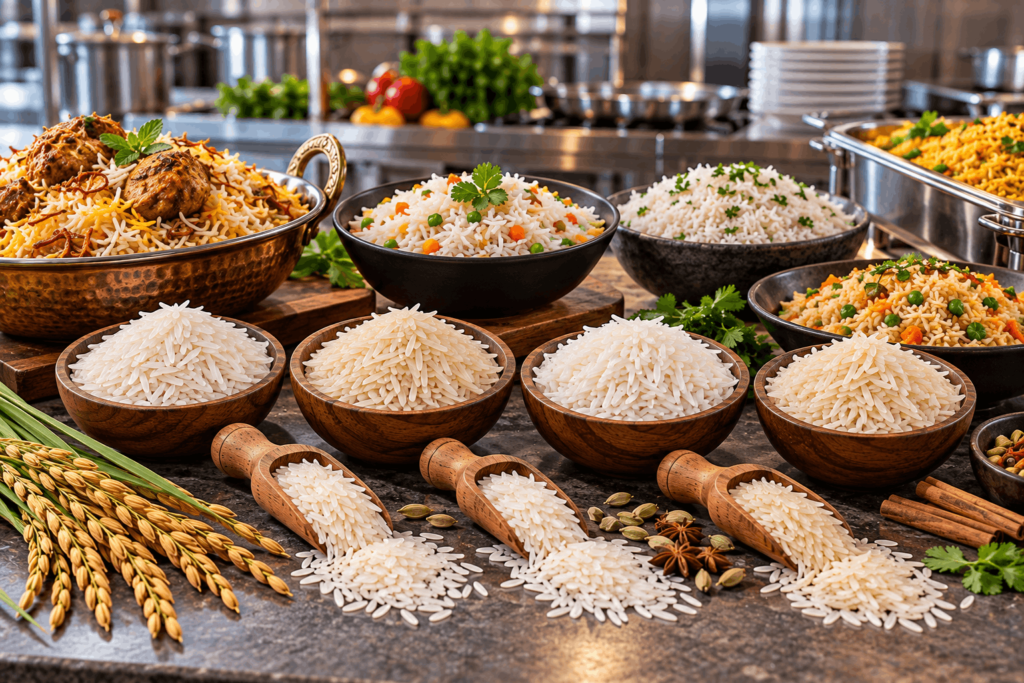
| Basmati Rice Variant | Performance Profile | Recommended Food Service Application |
| 1121 White Basmati Rice | Exceptional uncooked length (8.35+ mm), brilliant white finish, distinct aroma, superior elongation. | Fine dining establishments, signature biryanis, high-end rice platters. |
| 1121 Steam Basmati Rice | Enhanced kernel strength via steam processing, minimal breakage during bulk boiling, dry grain separation. | High-volume commercial catering, hotel dining halls, large banquets. |
| 1121 Golden Sella | Parboiled under pressure prior to milling; locks in nutrients, highly resistant to overcooking. | Heavy-handling commercial kitchens, outdoor catering, pilaf dishes, buffet spreads. |
| Long Grain White Basmati Rice | Quick-cooking, fluffy texture, subtle natural aroma, cost-effective pricing structure. | Daily thalis, quick-service restaurant (QSR) combos, fried rice bases, routine side dishes. |
The Role of Grain Aging and Moisture Management
The starch in the grain of newly harvested rice is not fully set and the grain contains a lot of moisture. During commercial cooking, excess starch is released and yields very sticky grains that break apart during handling.
Improper aging leaves moisture in the grain and the starch is not set. Grains of properly aged basmati do not stick together after cooking and do not break apart during handling. Properly aged basmati:
- Improves the extent of cooking of the grain and prevents stickiness.
- Improves the absorption capacity of the grains and retains the flavor during the cooking process.
- Improves elongation of the grains.
When purchasing basmati rice in bulk, there are a few things to look out for. The mill must have a system in place to age the rice correctly, as well as test the moisture content of each batch.
Processing Quality: Sorting, Grading, and Purity
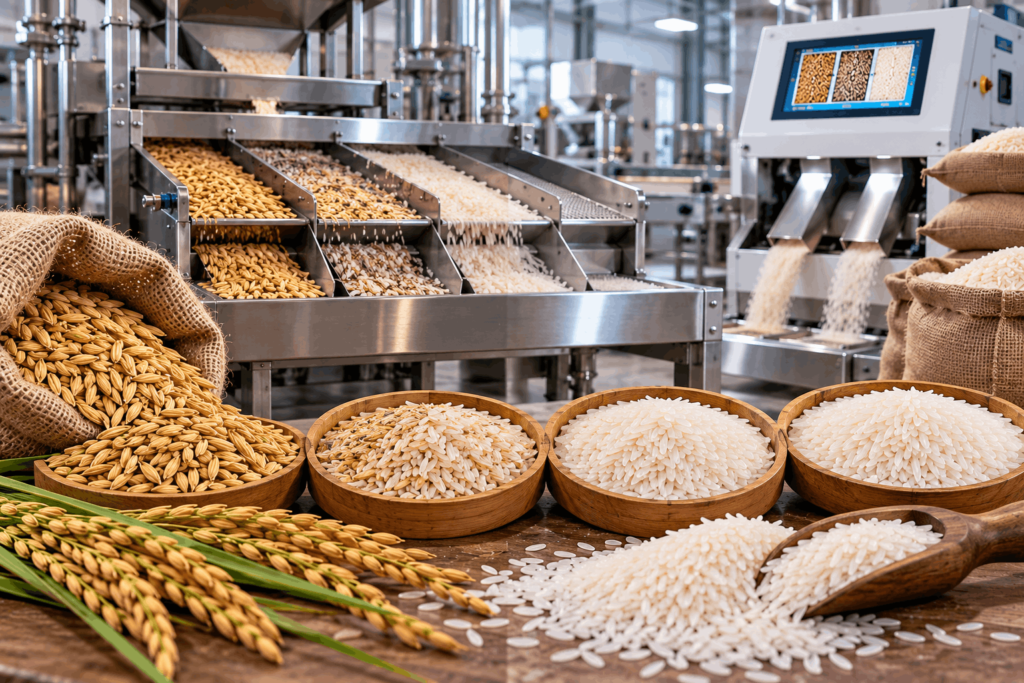
Cooking rice from a bulk shipment can be challenging because of processing inconsistencies at the mill. Grain size can vary, leading to differences in cooking times and uneven expansion of the grains.
Commercial Kitchen Usage
Optically sorted rice allows kitchen staff to forgo time consuming inspection and cleaning of the rice before it is cooked.
Purity
Rice can also be graded by size. If a shipment contains rice of varying sizes, the smaller grains can cook, and consequently soften and break down, before the larger grains.
Polishing
The degree of polishing can also affect the quality of the rice. If the husk is fully removed, the rice can break apart when cooked.
Direct Sourcing: Protecting Quality and Profit Margins
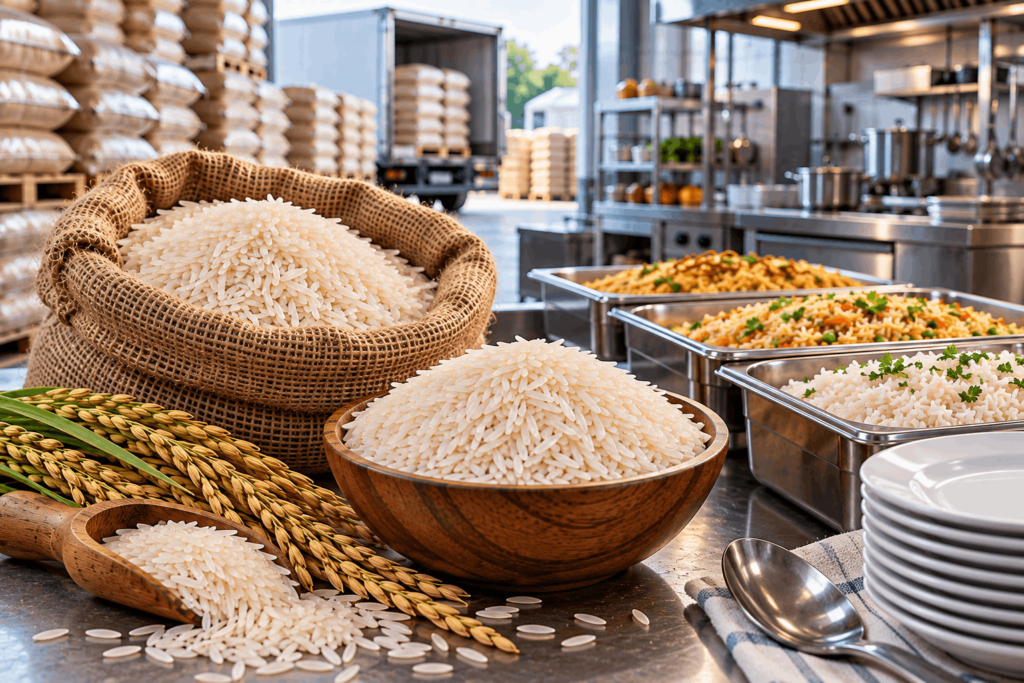
Food service establishments have an advantage when they buy rice directly from the mill rather than going through a distributor. When buying rice directly from India, the food service establishment can ensure the quality of rice it serves, and remove middlemen from the supply chain.
Batch-to-Batch Uniformity: Rice is milled multiple times to remove layers and replace moisture in the grains to ensure that the rice cooked 6 months from now is cooked the same way as rice cooked today. Chefs no longer need to experiment with the water to rice ratio when cooking different batches.
Cost & Margin Optimization: By cutting out the middleman and dealing with processors, costs per kilogram is reduced and food margin cost improves.
Supply Security: Large rice mills purchase and store large supplies of paddy to ensure consistent supply for their customers.
Commercial Advantage with Waada Basmati Rice
The Waada brand processes and sells high quality basmati rice to commercial and institutional clients. The Waada brand utilizes state-of-the-art equipment to control moisture in rice and further process rice to optimize yield.
Basmati Rice Products: The link provides the product specifications and description of the Waada rice products.
Best Practices for Storing Bulk Rice in Commercial Kitchens
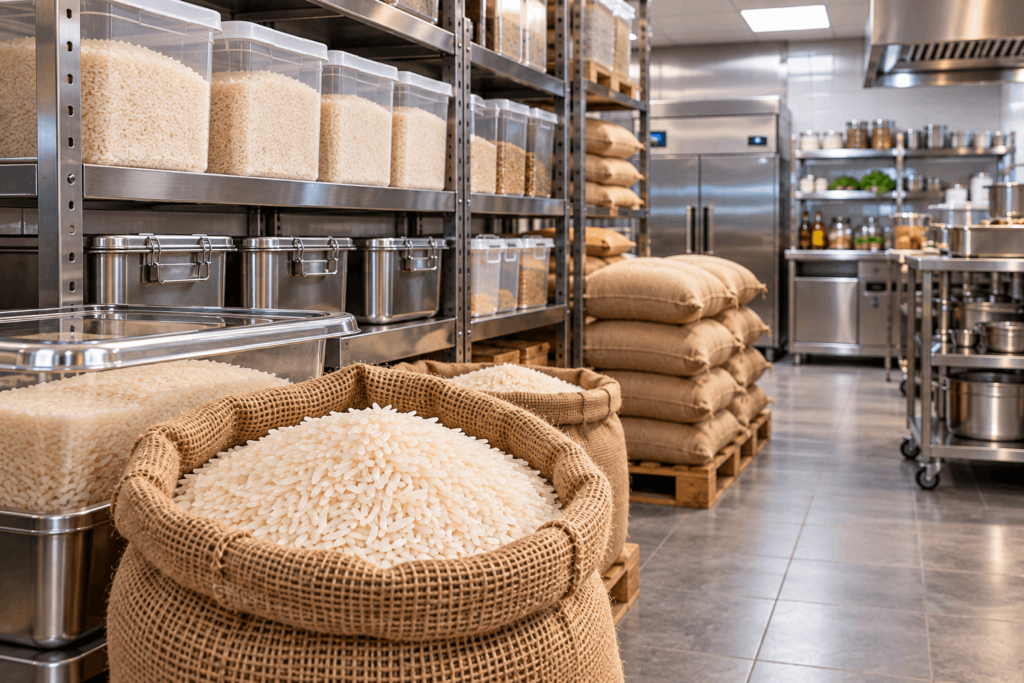
Rice is a temperamental grain and will lose quality if not properly stored. Improper storage will negatively impact a food service operation. Below are some best practices to storing rice.
1. Raised Surfaces: store rice off the ground on a pallet
2. Storage Climate: Store rice in a dry and cool place.
3. First In, First Out (FIFO): Use your inventory system to make sure older ingredients are used first. This helps to even out the age of your ingredients.
4. Sealed Storage Containers: Grain is usually shipped in bulk. If you purchase bulk grain, you should transfer the grain to an airtight container to protect it from pests and humidity.
Conclusion
When looking at various types of rice for a food service business, one needs to look at many different factors including how the rice will perform during processing, volume, hardness, and of course cost. As mentioned before, using old, well-milled rice varieties not only adds value to a dish but also helps control the bottom line of the business.
Waada has an apparent interest in food service and produces rice that meets and exceeds the expectations of food service customers. If you are interested in purchasing rice in bulk, or would like more information, please contact Waada’s commercial sales team via the Contact Us page.